In the predawn hours on Saturday, President Donald Trump announced the stunning capture of Venezuelan President Nicolas Maduro — a dramatic development for a nation that, despite sitting atop the world’s largest oil reserves, has been hobbled by years of economic collapse and political turmoil.
Trump accused Venezuela’s socialist government of seizing American energy assets and dismantling an industry built with U.S. investment.
“Venezuela unilaterally seized and sold American oil, American assets and American platforms, costing us billions and billions of dollars,” Trump said during a news conference at Mar-a-Lago in Palm Beach, Florida. “They took all of our property.”
FOLLOW FOX NEWS LIVE COVERAGE OF VENEZUELA
“We built Venezuela’s oil industry with American talent, drive and skill, and the socialist regime stole it from us,” he added. Trump added that U.S. energy companies would play a key role in rebuilding the Latin American country’s oil sector.
“We are going to have our very large United States oil companies go in, spend billions of dollars, fix the badly broken oil infrastructure and start making money for the country,” he said.
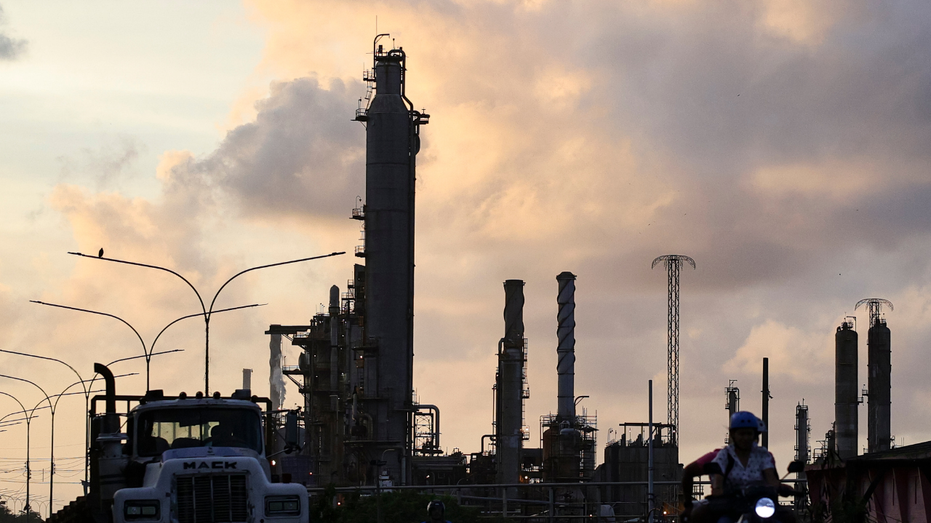
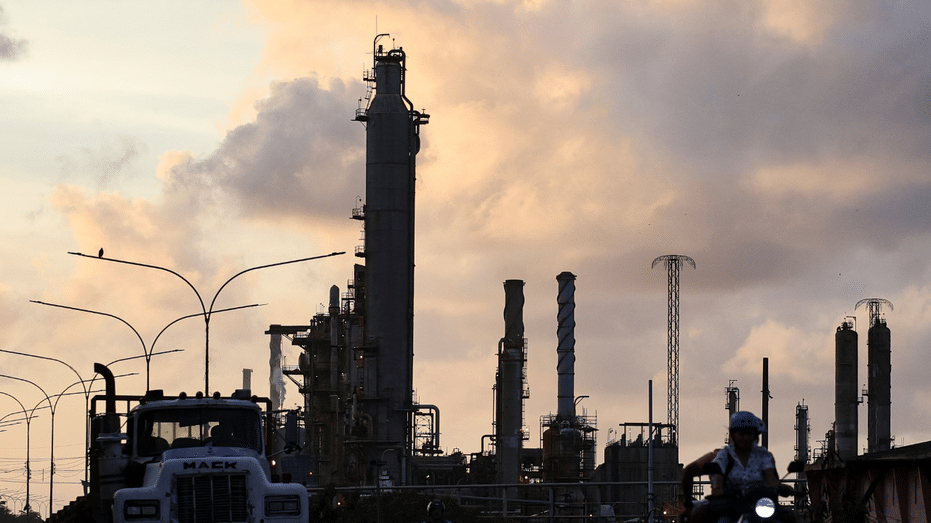
Roughly twice the size of California, Venezuela holds the world’s largest proven oil reserves. At an estimated 300 billion barrels, about 20% of the global total and nearly four times U.S. reserves, that endowment dwarfs that of any other nation.
Much of that oil, however, is difficult and expensive to produce. Venezuela’s reserves are dominated by heavy and extra-heavy crude that requires specialized equipment, constant maintenance and advanced refining capacity — much of which has deteriorated after years of underinvestment and skilled labor losses.
‘WE BUILT VENEZUELA’S OIL INDUSTRY:’ TRUMP VOWS US ENERGY RETURN AFTER MADURO CAPTURE
Beyond technical challenges, Venezuela’s crisis-stricken economy and persistent political instability have further limited its ability to convert those reserves into sustained production. Similar dynamics have played out in countries such as Iran and Libya, where turmoil and sanctions constrain output despite vast resource wealth.
“Venezuela under Maduro and under his predecessor have wrecked Venezuela’s economy,” said Diana Furchtgott-Roth, director of the Center for Energy, Climate and Environment at The Heritage Foundation. She said the country’s communist system has hollowed out its industrial base.
“That’s why Maduro relies almost entirely on oil — it’s the only profitable source of revenue for him,” she added.
Venezuela’s stockpile, now larger than those of energy titans like Saudi Arabia, has become a central flashpoint in the geopolitical struggle surrounding the country’s future.
Trump has said his administration will continue to enforce its embargo on Venezuelan oil, keeping pressure on the country’s primary source of revenue.
Whether Venezuela’s oil wealth can be unlocked now hinges not only on political change, but on whether years of underinvestment, decaying infrastructure and technical challenges can be reversed — a costly and complex task that would require billions of dollars and sustained stability.